NO&Co
New Economic Models as a lever for a sustainable economy
Projectomschrijving
A sustainable, healthy economy requires sustainable economic (business) models. Think of the sharing economy, the circular economy, the impact of creative commons, and so on. There's already a lot of discussion about it, and experiments are already underway. To truly impact the economic landscape, these businesses must not only increase in number but also be able to scale up and out. To achieve this, the sector needs a legal and economic framework aligned with its business principles.
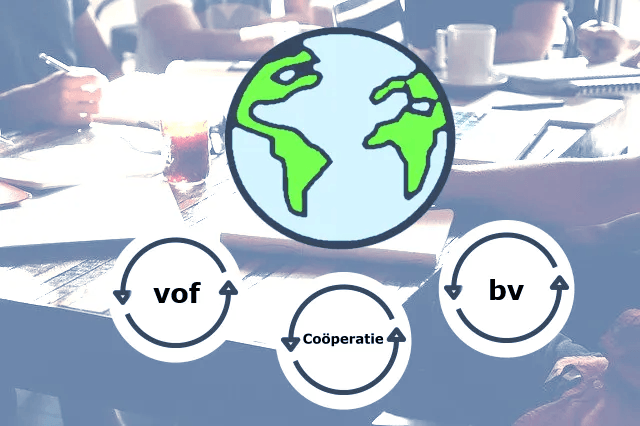
One aspect of this, which everyone has to deal with, and which is also one of the first things a starting entrepreneur faces, is the legal structure. We find that the legislation wasn't tailored to the needs of sustainable entrepreneurs.
The legal form is related to taxation, a further concern for entrepreneurs, and a policy instrument that can be used even more to stimulate and support a sustainable economy.
We have explicitly chosen a specific theme and an essential component in developing a suitable legal-economic framework for New Economic Business Models: the legal form and associated taxation. Because we align with the view of several researchers who argue that "the barrier to sustainability is no longer a lack of knowledge, it's the failure to act on that knowledge" (Chapman K., Complexity and Creative Capacity, p. 4), this project aims to contribute to translating theories and ideas into workable components.
Output
- Policy recommendations on legal form and taxation for sustainable entrepreneurs
- Communication about new economic models in the broadest sense of the word, with the aim of increasing public awareness and demonstrating their feasibility.
Financing type & term
PWO (Practical Scientific Research)
Duration 2020-2022
Info & Communication
Our blog regularly features information and reflections on the transition to new economic models and a sustainable society.
Contact details
Ilse.vandenberckt@ucll.be
an.degraeve@ucll.be
Partners