Head, heart, and hands. And a strong focus on social impact and innovation. This guides us in the selection and implementation of our activities. As researchers, or as partners in crime, we always strive for the small and large results that make a difference.
We focus on three major themes: Sustainable entrepreneurship, Wicked organizing and Maximizing impact
Sustainable entrepreneurship
Multiple value creation
A sustainable, healthy economy requires Sustainable Economic (Business) Models. Think of the sharing economy, the circular economy, the impact of (creative) commons, and so on. There's already a lot of discussion about it, and experimentation is already underway. These are business models that focus on multiple value creation (Jonker, 2015) and, in addition to financial profit, also incorporate social integration and ecological responsibility. What all these models have in common is that they are always business models, and they are highly complex! It's no wonder they deserve extra attention and require strong entrepreneurship. But to truly impact the economic landscape, these enterprises must not only increase in number but also be able to scale up. To achieve this, the macroeconomic framework must also evolve. A framework that encourages investment in social impact, not just shareholder value.
Pragmatism and entrepreneurship
We work with complex models here, and consequently, we integrate the principles of wicked challenges. Moreover, we align with the perspective of several researchers who state that "the barrier to sustainability is no longer a lack of knowledge, it's the failure to act on that knowledge" (Chapman K., Complexity and Creative Capacity). Talk alone won't cook the rice, as the saying goes, and that's why we focus on practice-oriented research and assignments. We also want to translate theories and ideas into workable components. We want to see an impact on society and are guided by this mission. This translates into pragmatism and impact-oriented work, but never without sacrificing solid academic knowledge.

Business models and partners in crime
New business models are complex and demand more than ever entrepreneurship and a thorough understanding of business models. We're happy to share our expertise with anyone who needs support. And for those who, like us, are passionate about a healthy economy, partners in crime are always welcome to contact us.
Discover our projects related to sustainable entrepreneurship
Wicked organizing
If your problem isn't resolved, it's probably wicked.
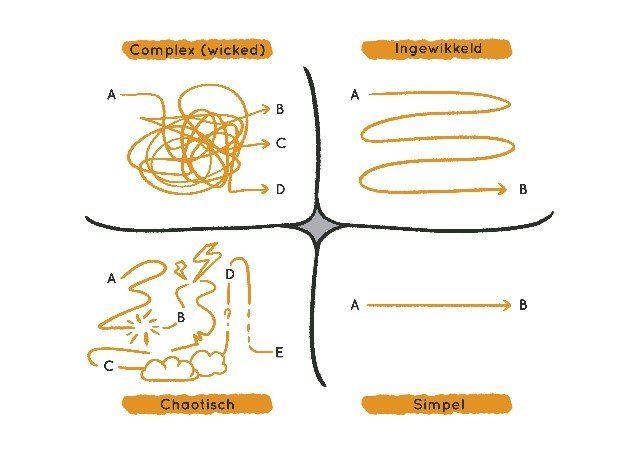
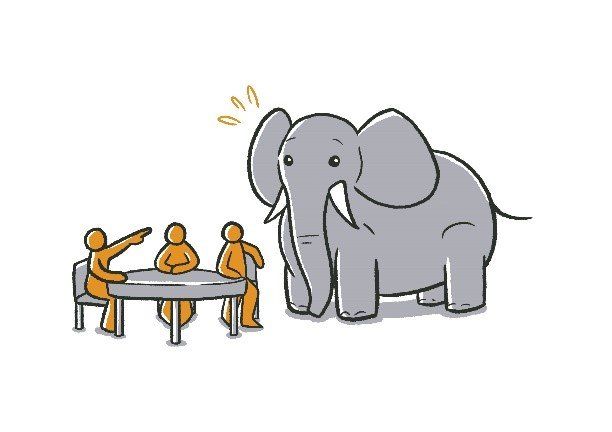
Wicked Challenges, or complex challenges, are called difficult, entangled, or mean for a reason; it's easy to get caught up in them. By definition, they're said to be unsolvable, and in the short term, this is certainly true. However, in the long run, they sometimes lose their relevance; consider, for example, women's suffrage. A topic of heated debate in Belgium in the 1950s, today it's a matter of course that no one pauses to consider. What keeps us awake at night these days is the coronavirus pandemic, rising inequality, Black Lives Matter, the climate, and so on. Research exists for each of these issues, and various solutions have been proposed. And yet, it's so difficult to put them into practice… because so many parties are involved, and each has its own perspective, position, and values.
Co-creating and co-designing for impact
All social and ecological challenges are wicked; we consider increased knowledge and understanding of complexity a necessary prerequisite for addressing them with impact. At CIMIO, this wicked mindset is woven into our research and the development of concrete projects. We prioritize co-creation with key stakeholders, designing together, and building the bridge as we go. We strive for impact and strive to take the "biggest possible step of the moment" toward a healthy and sustainable future. We strive for answers that work and that can be built upon in subsequent phases to create valuable next steps.
No impact without action
There's no impact without making things concrete and implementing them. And that applies equally to complex challenges. That's why we've formulated some key recommendations for those working with complexity:
- What exactly is the challenge you are facing?
- Who is involved in this challenge?
- What is a good format to bring together the key stakeholders?
- Who coordinates this process and organizes joint learning and doing (adaptive management)?
Workshops and process guidance
Recognizing and dealing with complex challenges requires knowledge and skills. We support organizations in this process through workshops.
We can also take on the role of process facilitator in complex projects, working closely with an internal coordinator while simultaneously transferring our know-how.
Maximize impact
From well-intentioned to well-done
What organization doesn't dream of having an impact, in addition to delivering quality? It's about keeping a clear focus on what truly matters and defining the most effective actions to achieve this dream or ambition. That's precisely what we're doing through our impact activities. Initially, impact thinking was primarily used as a tool to effectively implement the organizational mission. But with increasing social and ecological challenges, the emphasis on these themes is shifting from "doing things" to achieving clear results. And the focus is no longer solely on the effort, but primarily on how these actions create the desired impact.
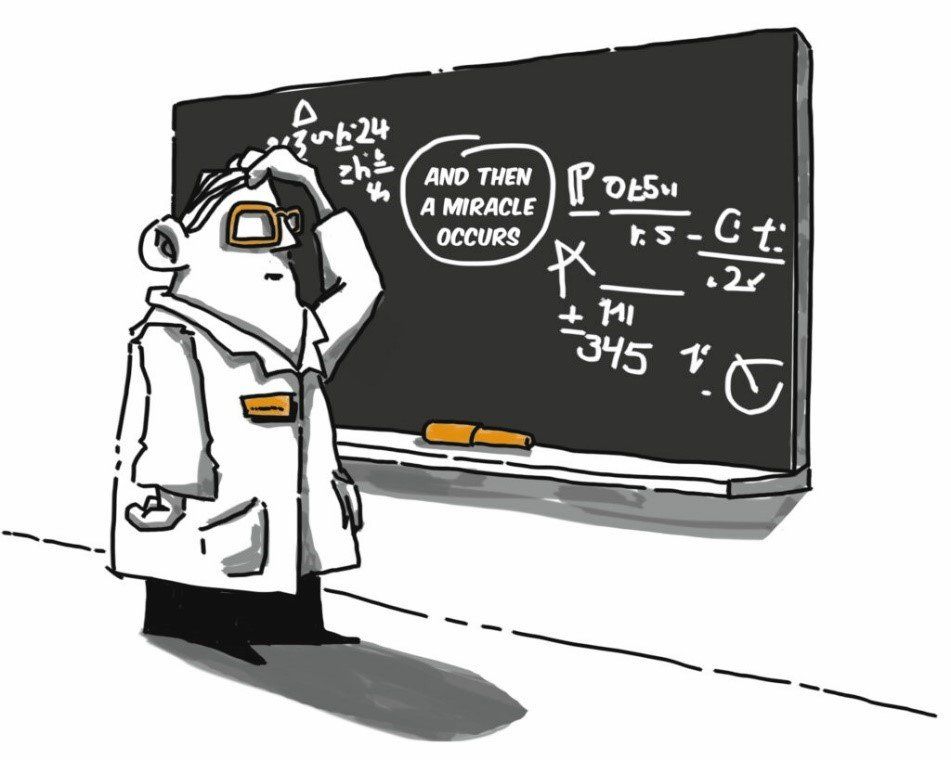
And then a miracle occurs…
Good results aren't accidental, nor are they achieved by sheer luck. But they do require insight into the impact goal's "change logic," also known as the theory of change. This provides an overview of how and why changes occur, how they lead to the achievement of impact goals, and the activities needed to achieve them.
If you, as a social organization, do not know your social impact, you are like a company that does not know how much profit it makes (Karen Maes)
In 5 steps to greater impact
To map the impact of projects, organizations, or services, we developed an Impact Action Plan. This action plan allows for structured and systematic impact measurement and continuous evaluation and optimization of the desired impact. We base this on the principle of "Think big, start small." Follow a feasible agenda, and above all, impact measurement is never a one-man job, so make sure to involve core stakeholders from the start.
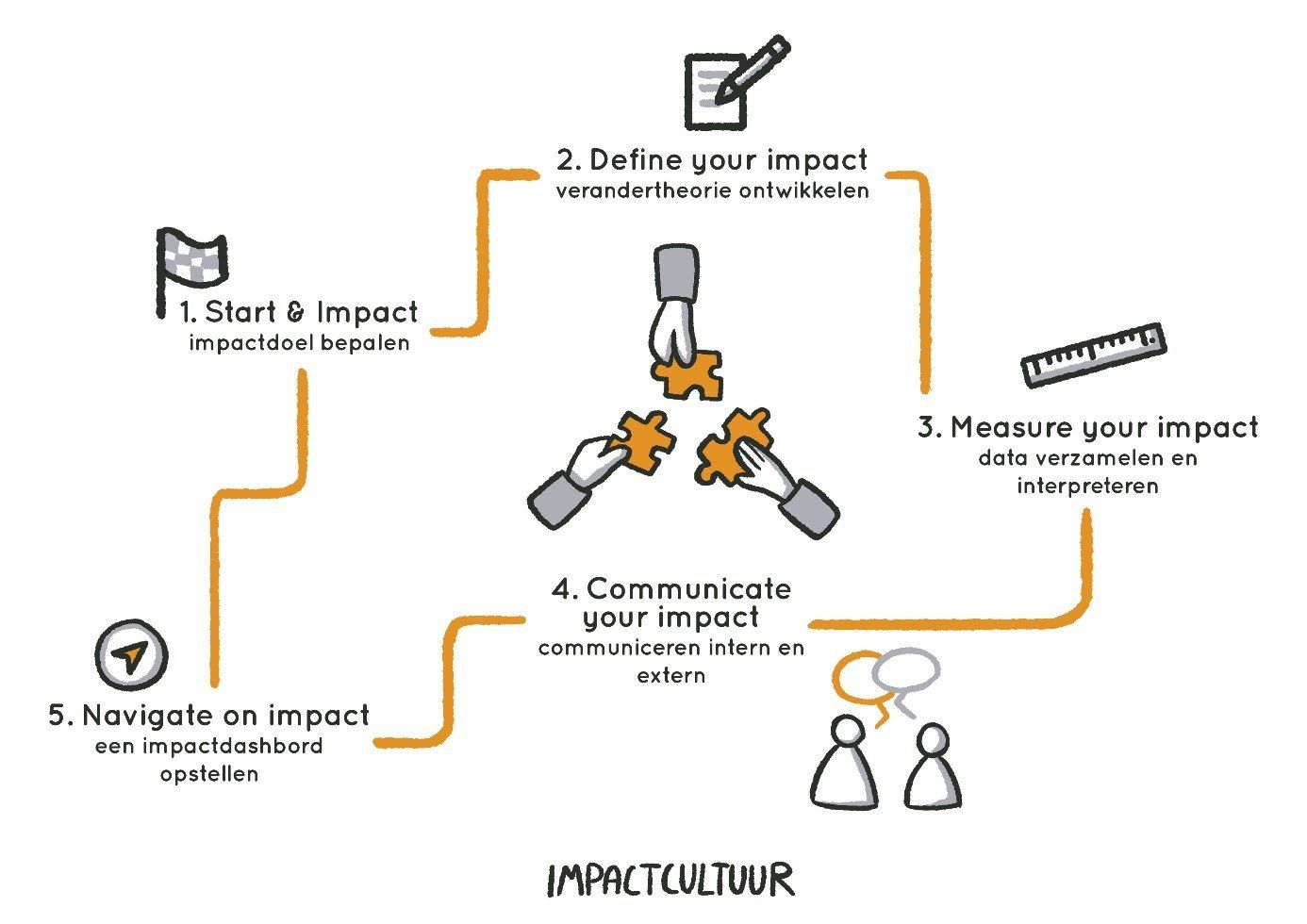
Workshops and process guidance
Impact-oriented work, clarifying impact, measuring impact, and managing impact are the guiding principles of our activities. In addition to conducting research, we support organizations in setting up impact trajectories, evaluations, and developing scientifically sound measurement tools.
Examples of our projects can be found in our portfolio.